
What Inflammation Actually Is
Most people talk about inflammation like it's the enemy. It isn't. Inflammation is the body's fire alarm — a coordinated biological response that keeps you alive. The problem starts when the alarm never shuts off.
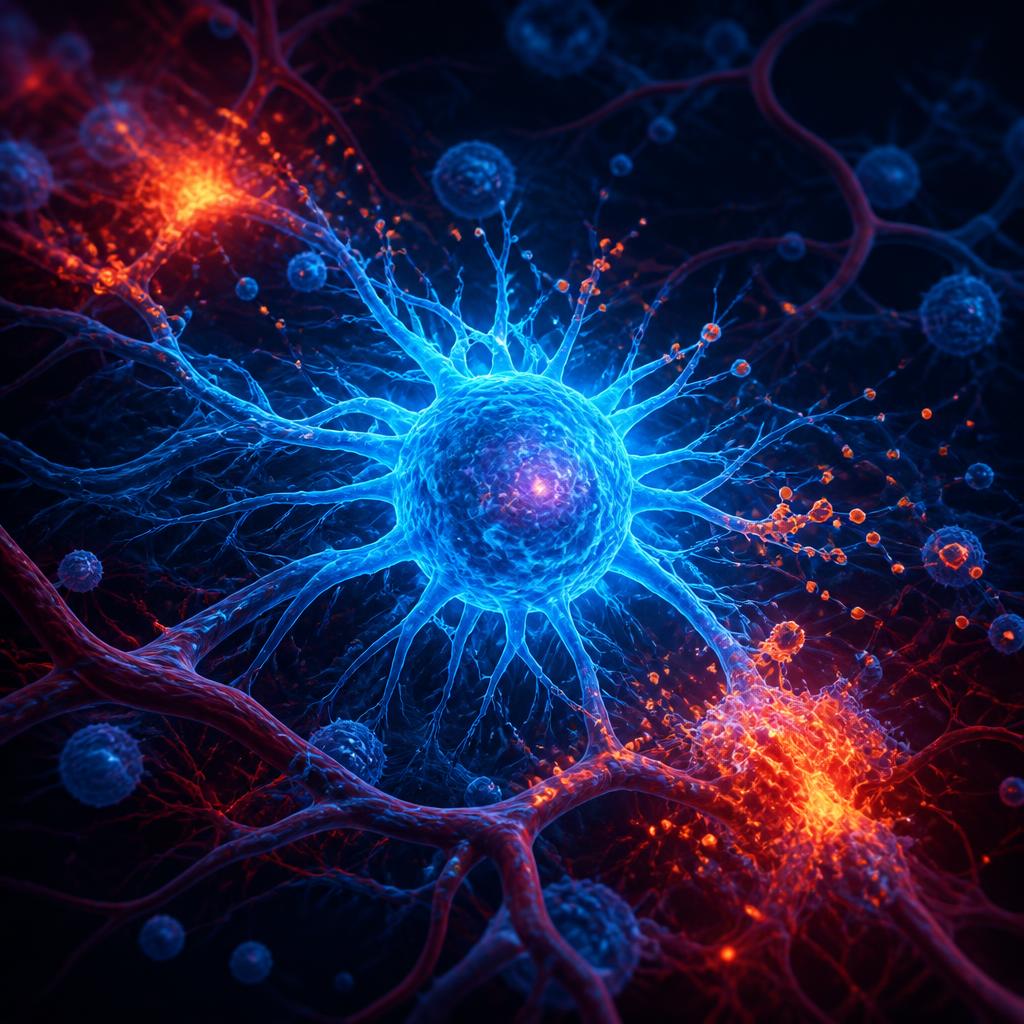
Inflammation is not a disease. It is a defensive process — the immune system's structured response to injury, infection, or cellular stress. When it fires and then resolves on schedule, tissue heals. When it lingers, it becomes the common denominator behind nearly every modern chronic condition on the map: cardiovascular disease, insulin resistance, neurodegeneration, autoimmunity, and accelerated aging.
The Five Classical Signs
Aulus Cornelius Celsus described four cardinal signs of inflammation in the 1st century AD, and Galen added a fifth. Two thousand years later, the description still holds:
- Rubor — redness from local vasodilation.
- Calor — heat from increased blood flow.
- Tumor — swelling from plasma leaking into tissue.
- Dolor — pain from sensitized nociceptors.
- Functio laesa — loss of function in the affected tissue.
These aren't symptoms to eliminate. They're evidence that the immune system is doing its job — sealing the breach, clearing debris, and setting the stage for repair.
Acute Inflammation: The System Working
Acute inflammation is fast, focal, and self-limiting. Damaged cells release DAMPs (damage-associated molecular patterns); pathogens carry PAMPs (pathogen-associated molecular patterns). Pattern-recognition receptors on tissue-resident macrophages and dendritic cells detect them and trigger a cascade:
- Vascular phase: Histamine, bradykinin, and prostaglandins dilate local vessels and increase permeability so plasma proteins and immune cells can reach the site.
- Cellular phase: Neutrophils arrive first within minutes, followed by monocytes that differentiate into macrophages. They phagocytose pathogens, dead cells, and cellular debris.
- Cytokine signaling: TNF-α, IL-1β, IL-6, and chemokines coordinate the response, amplify recruitment, and calibrate systemic effects like fever and acute-phase protein production.
This entire program is designed to run its course in hours to days and then shut down.
Resolution Is an Active Process
The most under-appreciated part of inflammation biology is that it doesn't just "wear off." Resolution is actively programmed. Specialized pro-resolving mediators (SPMs) — including resolvins, protectins, and maresins derived from omega-3 fatty acids EPA and DHA — switch the response from destructive to reparative. Neutrophils undergo apoptosis. Macrophages polarize from an M1 (pro-inflammatory) to an M2 (pro-resolving) phenotype and clear the apoptotic cells through efferocytosis. Tissue remodeling begins.
When resolution fails — from ongoing stimulus, poor lipid substrate, metabolic disease, or a dysregulated immune system — the acute program bleeds into a chronic one.
Chronic Inflammation: The Fire That Never Goes Out
Chronic inflammation is a slower, systemic, and structurally different response. Instead of neutrophils, the infiltrate is dominated by macrophages, lymphocytes, and plasma cells. Instead of clean resolution, the tissue sees simultaneous destruction and attempted repair — fibrosis, angiogenesis, and progressive architectural distortion.
The clinical footprint is enormous. Chronic low-grade inflammation — sometimes called "inflammaging" — is a driver of:
- Atherosclerosis and cardiovascular disease
- Type 2 diabetes and insulin resistance
- Non-alcoholic fatty liver disease
- Neurodegenerative disease including Alzheimer's and Parkinson's
- Autoimmune conditions such as rheumatoid arthritis and IBD
- Sarcopenia and age-related decline in tissue repair capacity
What Keeps the Fire Burning
The immune system doesn't invent inflammation out of nowhere. It responds to input. The most consistent lifestyle drivers of chronic inflammatory tone in the modern literature:
- Visceral adiposity: Adipose tissue behaves as an endocrine organ, secreting TNF-α, IL-6, and leptin while suppressing adiponectin.
- Poor sleep: Even a single night of restricted sleep raises circulating IL-6 and CRP.
- Chronic psychological stress: Sustained sympathetic and HPA-axis activation shifts immune cells toward a pro-inflammatory phenotype.
- Ultra-processed diets: High refined carbohydrate and industrial seed oil intake shifts the substrate pool away from resolution mediators.
- Sedentary behavior: Skeletal muscle contraction releases anti-inflammatory myokines (IL-6 in this context acts differently) that are absent when the tissue is inactive.
- Gut barrier dysfunction: Increased intestinal permeability lets LPS and other microbial products enter systemic circulation, driving low-grade endotoxemia.
Measuring It
The most accessible clinical markers of systemic inflammation are high-sensitivity C-reactive protein (hs-CRP), fibrinogen, ferritin, and the neutrophil-to-lymphocyte ratio. IL-6 and TNF-α can be assayed directly in research contexts. None of these are diagnostic on their own — they are windows into a system-wide state.
Why This Matters for Peptide Research
A large fraction of the peptides studied in regenerative research — BPC-157, TB-500, KPV, GHK-Cu, and the KLOW-style blends among them — are investigated specifically because they intersect with inflammatory signaling and tissue repair pathways. Their preclinical interest doesn't come from a blanket anti-inflammatory effect. It comes from their ability to bias the response toward resolution and remodeling rather than suppression alone. Understanding the underlying biology is the prerequisite for interpreting any of that literature honestly.
The Takeaway
Inflammation is not the villain. Unresolved inflammation is. The goal is not to blunt the immune system — it's to restore its ability to fire hard, finish the job, and stand down. That means addressing the inputs (sleep, training, body composition, diet, stress, gut integrity) before reaching for anything else.
References
- Medzhitov R. Origin and physiological roles of inflammation. Nature. 2008;454(7203):428–435.
- Serhan CN. Pro-resolving lipid mediators are leads for resolution physiology. Nature. 2014;510(7503):92–101.
- Franceschi C, et al. Inflammaging: a new immune-metabolic viewpoint for age-related diseases. Nat Rev Endocrinol. 2018;14(10):576–590.
- Furman D, et al. Chronic inflammation in the etiology of disease across the life span. Nat Med. 2019;25(12):1822–1832.
- Nathan C, Ding A. Nonresolving inflammation. Cell. 2010;140(6):871–882.
Disclaimer
This information is not medical advice. Content is provided for educational and informational purposes only and is not intended to diagnose, treat, cure, or prevent any disease. BioPrime products are sold strictly for in-vitro laboratory research by qualified professionals. Results from any research protocol will vary based on usage, conditions, and methodology.